
Publications
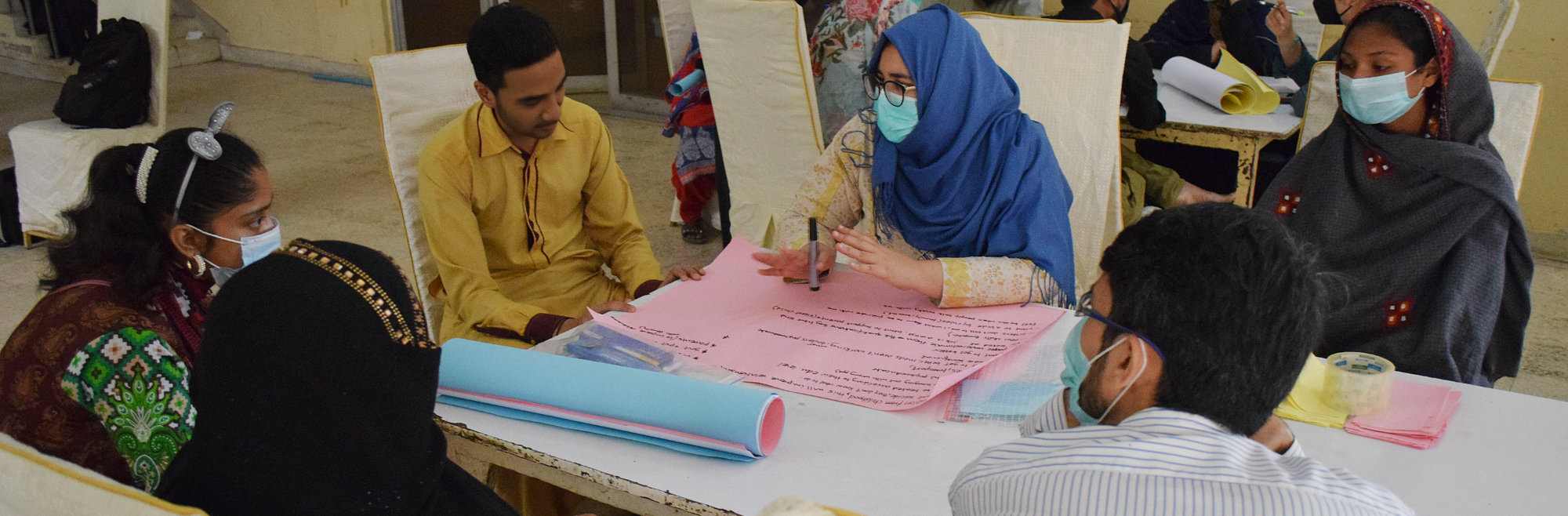
This archive brings together publications and outputs emerging from PIECEs — a five-year NIHR-funded research programme improving community-based mental health care in India and Pakistan.
Together, they reflect the connected programme of research across both countries, and present outputs in a range of formats, including journal articles, statistical analysis plans, toolkits and reports, organised by year and by type of publication. Individually and collectively, these works generate insights that aim to inform further research, spark discussion, and contribute to policy development.
Statistical Plan
PIECEs RCT Statistical Analysis Plan (SAP)
Year
2021
Statistical Plan
Health Economics Analysis Plan (HEAP) – PIECEs Trial
Year
2021
Toolkit
Voices in Practice: A Guide for Participatory Mental Health Research and Stakeholder Engagement in South Asia
Throughout PIECEs, people with lived experience were increasingly involved not simply as research participants, but as co-creators, knowledge-holders and agents of change, helping to shape the design, delivery and dissemination of the research.
The guide brings together practical lessons from the participatory approaches developed and tested through PIECEs, including Lived Experience Advisory Panels (LEAPs), Theatre of the Oppressed, SALT and the Community Life Competence Process, Quality Improvement, and small-scale research grants. It translates this collective experience into practical guidance for researchers, community organisations, facilitators, healthcare professionals and institutions seeking to embed lived experience, meaningful participation and community engagement within mental health research and services in South Asia and beyond.
Year
2026
Toolkit
A Guide to Developing an Advisory Board for People with Early Psychosis
Developed by the Schizophrenia Research Foundation (SCARF) in India, the guide provides practical guidance on establishing an advisory board, including defining its goals, recruiting and supporting members, orientation and training, structuring meetings and improving the board over time. It was developed through the PIECEs Small Scale Research Grant programme, funded by NIHR.
Year
2025
Journal Article
Implementing psychosocial interventions within low and middle-income countries to improve community-based care for people with psychosis—A situation analysis
Year
2022
Journal Article
PIECEs: RCT Findings paper
Year
2026
Journal Article
Helping people with psychosis with a low-cost intervention DIALOG+: protocol for the economic evaluation in a randomised control trial in India and Pakistan
Year
2025
Journal Article
Assessing the effectiveness and cost-effectiveness of a solution-focused resource-orientated approach (DIALOG+) to improving the quality of life for people with psychosis in India and Pakistan—a cluster RCT
Year
2023
Journal Article
PIECES- Pilot Feasibility Study: Exploring the feasibility and acceptability of DIALOG+ (a structured digital communication tool) in strengthening psychiatric care in India and Pakistan: a qualitative pilot study
Year
2025
Journal Article
SSRG: Of the people, for the people, by the people: Development of an ADvisory board for Experience-enriched service and research in Psychosis Treatment – ADEPT Project
Year
2025
Report
PIECEs' Smal Scale Research Grants in India and Pakistan - Report
Year
2025
Book Chapter
Chapter: Moving beyond the checklist: Practitioners' insight on lived experience collaboration in mental health research from India and Pakistan
Year
2026
Book Chapter
Chapter 27 in Handbook of Health Communication in the Global South: Transformative Participatory Research Methodologies in Mental Health Research - Insights from South Asia
Year
2026
Documentary Film
Voices Unheard
Filmed between Chennai (India) and Karachi (Pakistan), Voices Unheard follows four people living with psychosis as they navigate family life, work, relationships, and everyday challenges. Through intimate, first-person storytelling, the documentary offers a rare and deeply human perspective on recovery, resilience, and belonging, inviting audiences to reconsider what they think they know about severe mental illness.
The film was created as part of PIECEs, an international research programme exploring new approaches to community-based care for people living with psychosis in India and Pakistan. Grounded in the belief that people with lived experience are experts in their own lives, the project brought together participants, family members, researchers, artists, and mental health professionals through community-based interventions and creative participatory methods, including Theatre of the Oppressed, to challenge stigma and imagine new possibilities for care and inclusion.
Produced by: Schizophrenia Research Foundation (SCARF, India), Interactive Research & Development (IRD, Pakistan), Queen Mary University of London, and People's Palace Projects.
Year
2026